Canada's residential landscapes — from suburban Ontario to the edges of BC's temperate rainforests — host a surprisingly consistent cast of bird species year-round. Some are year-round residents that rely on backyard feeders through winter; others pass through briefly on migration. Knowing which species to expect, and when, is the starting point for meaningful backyard observation.
This guide covers the species most likely to appear in a typical Canadian backyard across southern Canada, with notes on how to distinguish them and what habitat conditions attract them.
Year-Round Residents
Black-capped Chickadee (Poecile atricapillus)
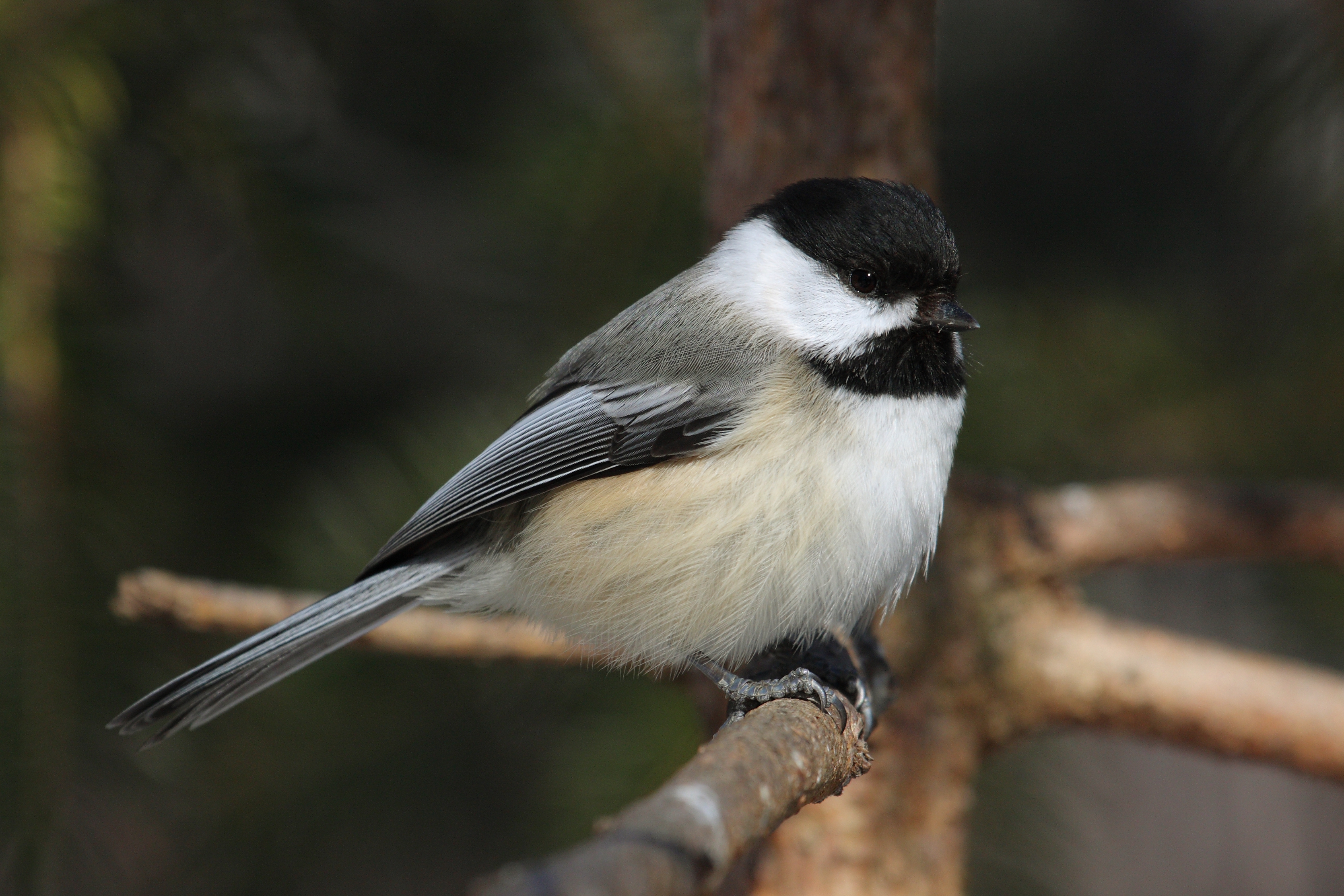
Among the most recognizable year-round birds in Canada, the Black-capped Chickadee is found from coast to coast. Its two-tone call — a whistled fee-bee in late winter and a distinctive chick-a-dee-dee-dee alarm — makes it easy to detect before it's seen. Adults show a clean black cap and bib contrasting sharply with white cheeks, and buffy flanks against off-white underparts.
Chickadees cache food extensively in autumn, hiding seeds individually across dozens of locations within their territory. They readily use nest boxes and will visit suet and sunflower seed feeders throughout winter. In cold snaps, they can lower their body temperature overnight — a form of regulated hypothermia that reduces energy demand.
Range note: The Black-capped Chickadee occurs across all provinces except the northernmost tundra zones. In BC's Lower Mainland and Vancouver Island, it overlaps with the Chestnut-backed Chickadee, which has a rich reddish-brown back and lacks the clean cap contrast.
American Robin (Turdus migratorius)
The American Robin is a familiar sight on lawns from April through October across most of Canada, and a year-round resident in milder coastal areas of BC and southern Ontario. Its brick-orange breast and yellow bill make it straightforward to identify. It forages primarily on earthworms by running across open ground, pausing, then tilting its head before pulling prey from the soil.
Robins nest in trees and on structures, preferring sites with a view of open ground. They produce two to three clutches per season and are responsive to habitat quality — lawns without pesticide use tend to support more consistent foraging activity.
Dark-eyed Junco (Junco hyemalis)
The Dark-eyed Junco is Canada's most variable sparrow, with several distinct regional forms. The Slate-colored form — common across most of eastern and central Canada — shows a dark grey hood contrasting with a white belly. The Oregon form, dominant in western Canada, has a blackish head and rufous flanks. Despite their appearance differences, all forms produce similar trilling songs and high-pitched contact calls.
Juncos forage on the ground beneath feeders, scratching at fallen seed. They nest on or near the ground in forested areas with dense understory. In winter, they often form mixed flocks with sparrows and chickadees.
Species Reference Table
| Species | Seasons Present | Key Field Marks | Preferred Habitat |
|---|---|---|---|
| Black-capped Chickadee | Year-round | Black cap & bib, white cheeks | Deciduous & mixed forest edges, feeders |
| American Robin | Spring–autumn (most areas) | Orange breast, yellow bill | Lawns, forest edges, parks |
| Dark-eyed Junco | Year-round (variable) | Dark hood, white outer tail feathers | Forest edges, brush piles, feeders |
| House Sparrow | Year-round | Males: grey cap, chestnut mantle, black bib | Urban areas, structures, feeders |
| White-breasted Nuthatch | Year-round | Blue-grey back, rust flanks, descending nasal call | Mature deciduous trees, suet feeders |
| Ruby-throated Hummingbird | May–September | Males: iridescent ruby throat patch | Gardens with tubular flowers, feeders |
Seasonal Migrants
Ruby-throated Hummingbird (Archilochus colubris)
The Ruby-throated Hummingbird is the only hummingbird species that breeds regularly in eastern Canada, arriving in southern Ontario and Quebec from early to mid-May. Males display an iridescent ruby-red gorget that appears black at certain angles. Females lack the gorget and show white-tipped outer tail feathers.
They feed on nectar from tubular flowers — native species such as Wild Columbine (Aquilegia canadensis), Cardinal Flower (Lobelia cardinalis), and Trumpet Creeper attract them consistently. Sugar-water feeders (four parts water to one part white sugar, no dye) supplement natural food sources. Feeders should be cleaned every two to three days in warm weather to prevent mold growth.

Improving Habitat for Backyard Birds
Several practical steps can increase both the diversity and consistency of bird visits:
- Native plantings: Shrubs and trees that produce fruit or seeds — serviceberry, dogwood, hawthorn — provide food more reliably than introduced ornamentals.
- Water: A shallow birdbath (no deeper than 5 cm at the deepest point) with a dripper or mister attracts species that rarely visit feeders.
- Brush piles: A loose stack of branches and leaf litter in a corner provides cover for ground-foraging sparrows and wrens.
- Nest boxes: Species-specific boxes (chickadee, Eastern Bluebird, Tree Swallow) should be mounted with appropriate hole sizes and predator guards.
- Window treatments: Collision with glass is among the leading causes of bird mortality. External screens, window decals spaced no more than 5 cm apart, or angled glass at 20° reduce strike rates.
Authoritative Resources
The following publicly available resources support further identification work:
- Cornell Lab of Ornithology — All About Birds
- NatureWatch Canada — citizen science observation records
- Environment and Climate Change Canada — Migratory Birds