
Residential gardens in Canada tend to favour introduced ornamental species — plants selected for bloom colour, tidy form, or disease resistance. Many of these serve minimal ecological function for local wildlife. Native plants, by contrast, have co-evolved with local insects, birds, and mammals over thousands of years, and their presence in a garden can significantly increase the variety of species that use the space.
This guide focuses on native plants available in Canada that provide documented wildlife benefit, organized by the type of habitat support they offer.
Why Native Plants Matter for Local Wildlife
The connection between native plants and local wildlife is most visible in insect ecology. Many specialist bee and butterfly species can only complete their life cycles on specific native plant genera. Monarch Butterflies, for instance, require milkweed (Asclepias spp.) as the exclusive larval host plant. Native bees — of which Canada has over 800 documented species — show far higher visitation rates to native flowering plants than to introduced cultivars.
Bird populations depend on insects for protein, particularly during breeding season when adults provision nestlings. Gardens with diverse native plantings support more insect biomass, which in turn supports more breeding birds. Research from the Smithsonian Migratory Bird Center (Dr. Doug Tallamy's work, published and widely cited) notes that native oaks support over 500 species of caterpillars compared to a handful on introduced ornamentals — though specific numbers vary by region.
Regional note: Canada spans multiple ecozones. Plant selection should account for local climate, hardiness zone, and ecoregion. Species native to Ontario may not be native to BC or the Prairies. The USDA/Natural Resources Canada joint plant hardiness zone maps provide zone data by location.
Plants for Bird Habitat
Serviceberry (Amelanchier spp.)
Multiple serviceberry species are native across Canada, including Saskatoon Serviceberry (A. alnifolia) in the west and Smooth Serviceberry (A. laevis) in the east. They produce small blue-purple fruits in early summer — often the first berry crop available — that attract Cedar Waxwings, robins, thrushes, and chipmunks. The shrubs also support early-season pollinators when few other plants are flowering.
Native Dogwoods (Cornus spp.)
Red-osier Dogwood (Cornus sericea), native across most of Canada, produces white berries that ripen in late summer and persist into autumn. The dense branching structure provides nesting sites for Song Sparrows and Yellow Warblers. Its ability to thrive in moist, low-lying areas makes it practical for rain garden plantings along fence lines.
Common Elderberry (Sambucus canadensis)
Elderberry is fast-growing and produces large clusters of dark berries in late summer. More than 50 bird species have been recorded consuming elderberries in North America. The compound leaves also support several specialist moth caterpillar species. Elderberry does best in full sun with consistent moisture and can be cut back hard every few years to maintain a manageable form.
Plants for Pollinators
Wild Columbine (Aquilegia canadensis)
Wild Columbine flowers from April to June, providing nectar during the period when Ruby-throated Hummingbirds arrive on migration. Its red and yellow spurred flowers are adapted for hummingbird pollination, though several native bumblebee species also visit. It self-seeds readily in partially shaded spots and tolerates rocky, well-drained soils.
Purple Coneflower (Echinacea purpurea)
Native to eastern North America and widely available in Ontario and Quebec, Purple Coneflower is among the most consistently visited plants by native bees in mid-summer gardens. The seedheads persist through winter and are a reliable food source for American Goldfinches. It prefers full sun and well-drained soil, and establishes more effectively from transplants than direct seed.
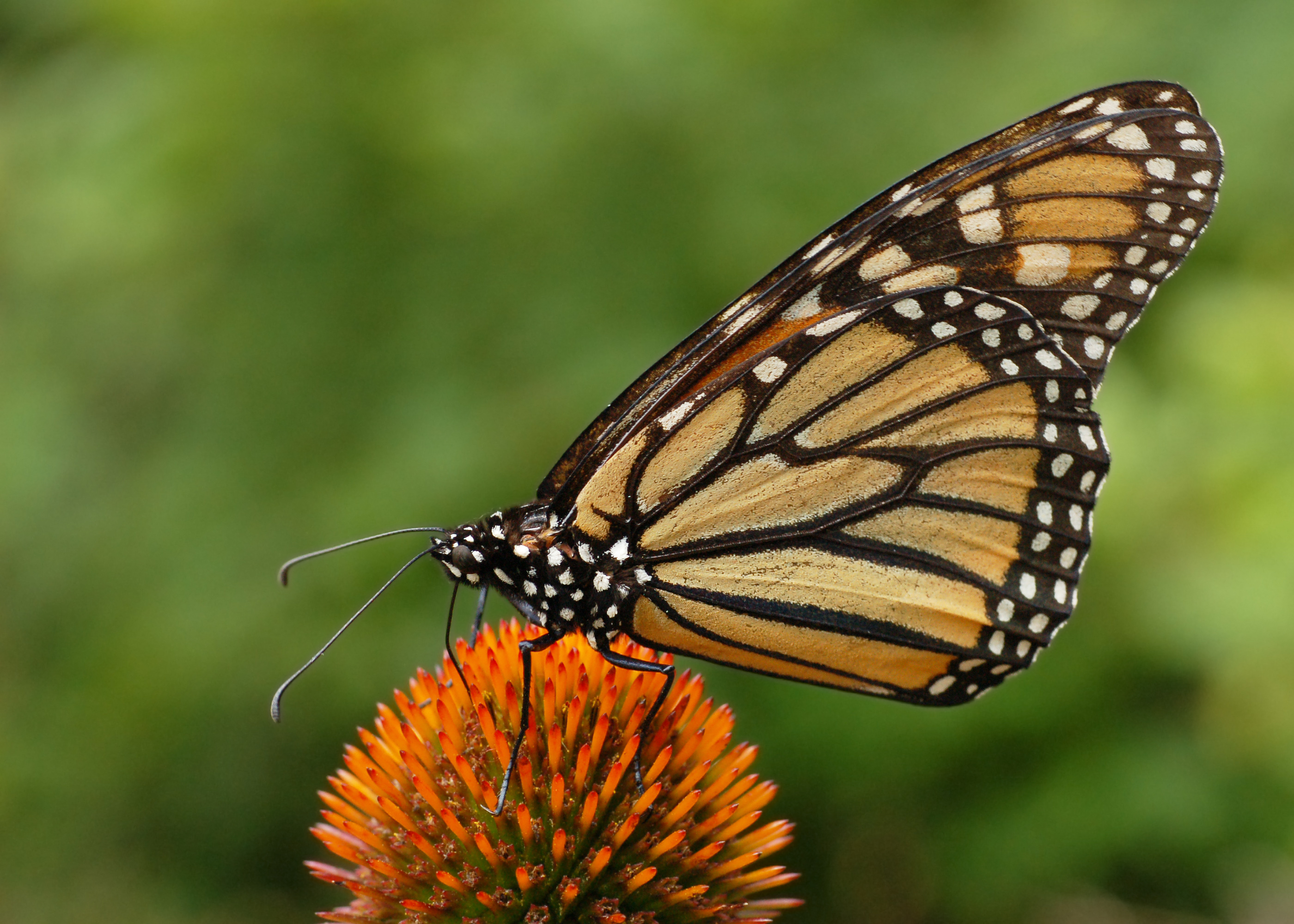
Common Milkweed (Asclepias syriaca)
Common Milkweed is the primary larval host plant of the Monarch Butterfly in eastern Canada. Its range covers Ontario and Quebec into the Maritime provinces. Planting milkweed in sunny, open areas supports the breeding population of monarchs before their autumn migration to central Mexico. Milkweed spreads by rhizome and can become expansive; it works well planted against fences or in defined garden beds where lateral spread can be managed.
Structural Plants for Cover and Nesting
Native Willows (Salix spp.)
Willows are among the most ecologically productive plants for insects in Canada, supporting hundreds of moth and butterfly caterpillar species depending on species and region. They establish quickly in moist areas and provide dense branching cover. Pussy Willow (Salix discolor) is among the earliest pollen sources available each spring, critical for early-emerging bumblebee queens.
Wild Hawthorns (Crataegus spp.)
Hawthorn species native to various parts of Canada produce thorny, dense branching that offers nesting cover resistant to predator access. Their fruit — small red haws — persists through autumn and into early winter, providing food for thrushes, waxwings, and sparrows. Multiple native hawthorn species exist; selection should match local ecoregion.
Plant Selection by Region
| Region | Recommended Native Plants | Primary Wildlife Benefit |
|---|---|---|
| Ontario / Quebec | Wild Columbine, Common Elderberry, Common Milkweed, Purple Coneflower | Hummingbirds, Monarchs, native bees, berry-eating birds |
| British Columbia (coastal) | Red-flowering Currant, Nootka Rose, Pacific Bleeding Heart, Camas | Rufous Hummingbird, native bumblebees, deer |
| Prairies (AB, SK, MB) | Saskatoon Serviceberry, Plains Coneflower, Blue Wild Rye, Buffalo Berry | Prairie birds, bees, deer, small mammals |
| Atlantic Canada | Wild Blueberry, Sheep Laurel, Balsam Fir (shelter), Sweetgale | Songbirds, bumblebees, grouse |
Establishing a Native Plant Garden
Transitioning a conventional garden to native plantings is typically done gradually over two to three seasons. Removing established turf and replacing with a mulched native planting bed reduces ongoing maintenance and eliminates the need for irrigation once plants are established. The following sequence tends to produce good results:
- Remove existing turf or invasive groundcover in the target area in autumn.
- Cover with thick cardboard and 10 cm of wood chip mulch to suppress regrowth over winter.
- Plant native shrubs and perennials in spring into openings in the mulch layer.
- Water consistently during the first growing season; established natives typically require no supplemental irrigation afterward.
- Allow spent seedheads to persist through autumn and winter for bird foraging.
Further Reading
- Species at Risk Public Registry — Environment Canada
- NatureWatch Canada
- National Wildlife Federation — Certified Wildlife Habitat